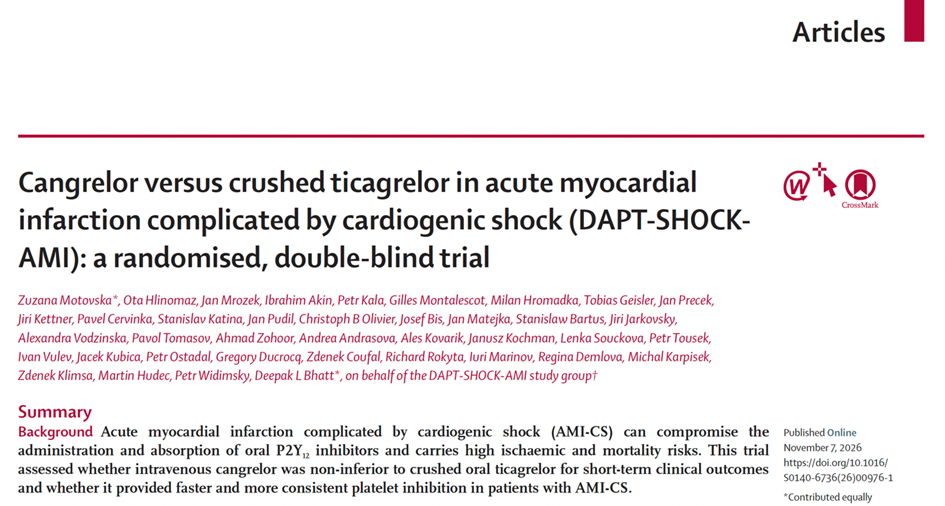
The results of the international, non-commercial, academic clinical trial DAPT-SHOCK-AMI, which focused on the treatment of patients with acute myocardial infarction complicated by cardiogenic shock, were published simultaneously in two leading international medical journals, The The Lancet and Circulation. The study provides new scientific insights into one of the most challenging areas of acute cardiology and, at the same time, represents a significant achievement in Czech academic clinical research. The national research infrastructure CZECRIN, based at the Faculty of Medicine of Masaryk University, also played a significant role in its preparation. The study was initiated and led by Prof. Zuzana Moťovská, M.D., Ph.D., from the Cardiocenter of the Third Faculty of Medicine at Charles University and the Královské Vinohrady University Hospital, together with Prof. Deepak L. Bhatt of Mount Sinai Fuster Heart Hospital in New York. The research brought together 29 hospitals in five European countries (the Czech Republic, Germany, France, Poland, and Slovakia), and a total of 605 patients were enrolled.
DAPT-SHOCK-AMI is the largest randomized clinical trial to date focusing on clinical outcomes and the pharmacological treatment of patients with this serious complication of acute myocardial infarction. At the same time, it is the first randomized comparison of two dual antiplatelet therapy strategies in patients at the highest risk.
When a clinical question takes on an international dimension
“Cardiogenic shock is one of the most serious complications of acute myocardial infarction. In this condition, the heart is unable to ensure adequate blood flow to the body, and despite advances in modern medicine, the mortality rate among these patients remains exceptionally high—approximately 50 percent,” explains Prof. Zuzana Moťovská, M.D., Ph.D., principal investigator of the DAPT-SHOCK-AMI study.
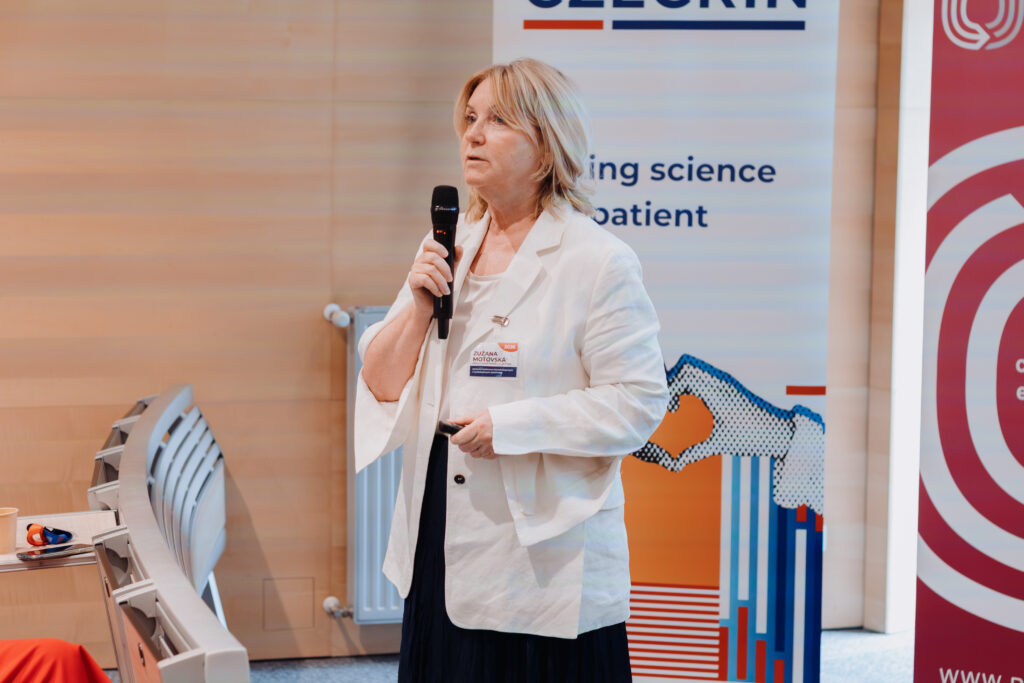
One of the key components of treatment for an acute heart attack is antiplatelet therapy. It is part of what is known as reperfusion therapy—that is, restoring blood flow in the affected artery where it has been blocked or significantly restricted by a blood clot. The most effective method of restoring blood flow is mechanical reperfusion with stent implantation, and dual antiplatelet therapy is an integral part of this process. In patients with cardiogenic shock, the absorption of orally administered medications is slowed and unreliable, which can affect the speed at which they take effect.
The DAPT-SHOCK-AMI study therefore compared two strategies for combined antiplatelet therapy: intravenously administered cangrelor and ticagrelor administered in the form of crushed tablets.
The results confirmed a significantly faster onset of the antiplatelet effect of cangrelor. At the end of the coronary intervention, the desired effect was achieved in all evaluated patients treated with cangrelor, whereas in the group treated with orally administered ticagrelor, it was achieved in 22% of patients.
The study did not show a significant difference in the 30-day primary composite clinical endpoint, which was all-cause death, myocardial infarction, or ischemic stroke (38% with cangrelor and 41% with ticagrelor). However, it demonstrated that intravenously administered cangrelor provides an immediate and reliable antiplatelet effect in patients with cardiogenic shock, without increasing the risk of major bleeding (6% with cangrelor and 5% with ticagrelor).
Descriptive and exploratory analyses showed fewer periprocedural complications and a lower incidence of early stent thrombosis and reinfarction in the cangrelor-treated group. These findings should be viewed as hypotheses that require confirmation in further randomized trials.
New Insights into Myocardial Damage and Recovery
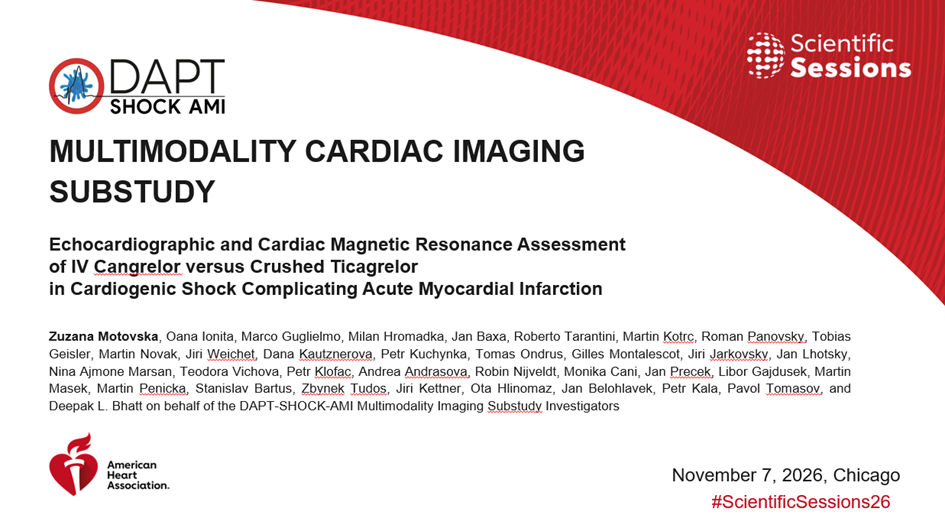
In addition to the study’s main results, published in The Lancet, an imaging substudy was also published in Circulation.
Using echocardiography and magnetic resonance imaging, this substudy assessed heart muscle damage and changes in heart function over the course of one year. The results provided further insights into possible differences in heart muscle damage and recovery among the compared treatment strategies.
The findings suggest a possible beneficial effect of cangrelor treatment on myocardial microcirculation and subsequent functional recovery. However, given the exploratory nature of these results, their clinical significance will require further verification.
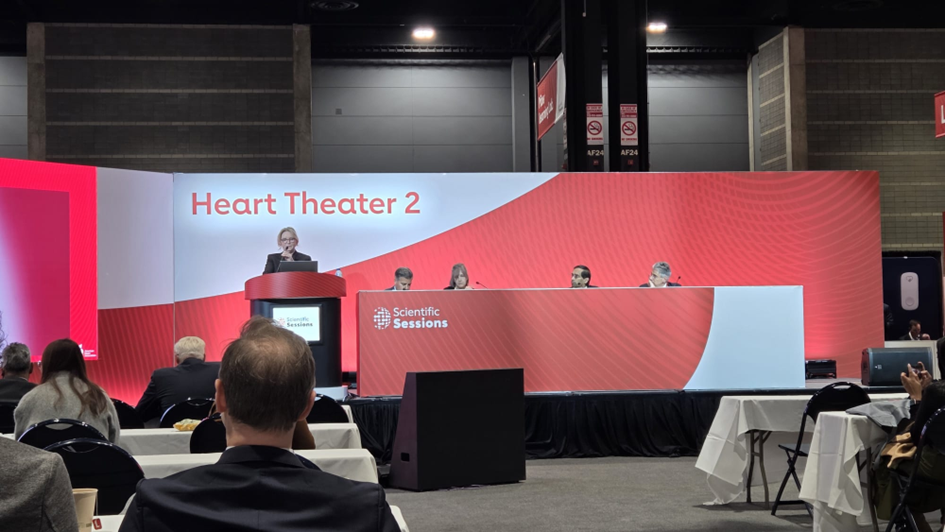
Professor Moťovská presented the imaging substudy on November 7, 2026, at the annual American Heart Association Scientific Sessions in Chicago, where it was included in the prestigious “Late Breaking Clinical Trials” section.
CZECRIN as a Key Partner in International Academic Clinical Research
Conducting a large-scale international non-commercial clinical trial presents extraordinary professional, methodological, organizational, and regulatory challenges. Therefore, in addition to clinical research teams, specialized research infrastructures play a crucial role by providing the professional support necessary for the preparation and conduct of non-commercial clinical trials.
It was precisely this support that the national clinical research support infrastructure CZECRIN provided to the DAPT-SHOCK-AMI study. Its experts contributed to the methodological preparation of the study, its coordination, and securing the regulatory approvals necessary for its implementation. Another significant component of the collaboration was the work of the Institute of Biostatistics and Analyses at Masaryk University’s Faculty of Medicine, which handled data management and contributed to the statistical analyses.
“Without CZECRIN’s cooperation, the DAPT-SHOCK-AMI study would not have taken on an international scope. The support that this academic, non-commercial clinical trial received from CZECRIN had a fundamental impact on its implementation and, consequently, on the quality of the evidence the study produced,” says Professor Moťovská.
“This study demonstrates the importance of independent academic clinical research and the professional infrastructure that enables it. A clinical research question arises when a physician seeks better treatment options for their patients. However, in order to answer this question through a high-quality international study, clinical expertise must be combined with methodological, regulatory, data, and organizational support. Supporting such collaboration is the fundamental mission of CZECRIN,” says Assoc. Prof. Regina Demlová, M.D., Ph.D., head of the CZECRIN research infrastructure.
Czech Academic Research with International Impact
The importance of the DAPT-SHOCK-AMI study is also underlined by its independent academic character. The research was supported by the Agency for Health Research of the Czech Republic (AZV ČR) and financed from public and other non-commercial sources, without financial participation from the manufacturer of the evaluated medicinal product.
The publication of the study results in The Lancet represents a scientific milestone for academic medical clinical research in the Czech Republic.
The DAPT-SHOCK-AMI study is also an example of successful international academic collaboration that has brought together Czech clinical centers with leading European research teams, including those from university centers in Mannheim, Freiburg, Tübingen, Paris, Kraków, Bydgoszcz, and Warsaw. It demonstrates that a clinical question originating in the Czech Republic can, thanks to the joint efforts of researchers, healthcare facilities, and specialized research infrastructures, grow into a large-scale international project.
For the CZECRIN infrastructure, this achievement serves as further confirmation of the importance of long-term support for non-commercial clinical research. Its role is to provide expert support to academic researchers and healthcare facilities so that they can conduct clinical trials that meet the highest international standards.
It is precisely this type of research that makes a fundamental contribution to the development of evidence-based medicine. It provides answers to clinically important questions, helps us better understand the effects of treatment, and lays the foundation for further improvements in patient care.
About the DAPT-SHOCK-AMI Study
DAPT-SHOCK-AMI is an international, multicenter, randomized, double-blind clinical trial comparing two antiplatelet therapy strategies in patients with acute myocardial infarction complicated by cardiogenic shock. A total of 605 patients from 29 hospitals in five European countries were enrolled in the study. The principal investigators are Prof. Zuzana Moťovská and Prof. Deepak L. Bhatt.
About CZECRIN
CZECRIN is a major research infrastructure in the Czech Republic focused on supporting and developing academic clinical research. It operates at the Faculty of Medicine of Masaryk University and is the national partner of the European research infrastructure ECRIN-ERIC. It provides methodological, regulatory, coordination, and other expert support in the preparation and conduct of non-commercial clinical trials and contributes to the development of high-quality, independent clinical research in the Czech Republic.
Professional Publications
The Lancet (2026): https://www.thelancet.com/journals/lancet/article/PIIS0140-6736(26)00976-1/abstract
Circulation (2026): https://www.ahajournals.org/doi/10.1161/CIRCULATIONAHA.126.083929